Peaklife
The platform behind a longevity clinic, from the raw pathology file to the patient's biological age.

Preventative Health Clinic Software with Automated HL7 Pathology Ingestion
A clinical platform built for longitudinal preventative care rather than episodic treatment, with pathology results arriving automatically from any referring lab, biomarker naming reconciled inside the admin portal, and a patient dashboard that presents biological age, risk scoring and biomarker trends in one place.
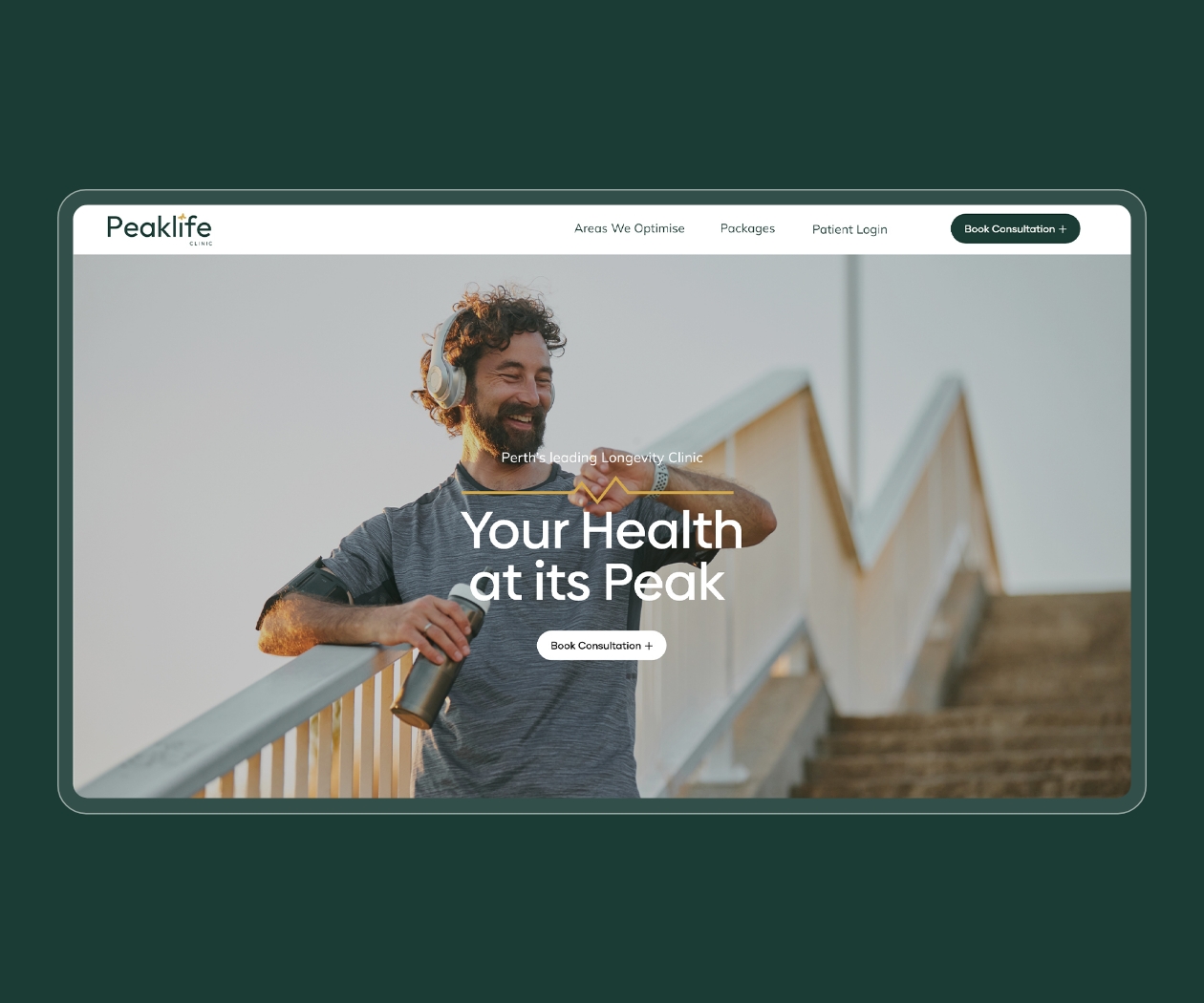
Peaklife is a premium, medically grounded longevity practice. Its clinical model combines comprehensive diagnostics, imaging, fitness and body composition testing and behavioural guidance into a single long term view of a patient’s health. Traditional EMR and EHR systems are built around treating episodes of illness and billing for them. Peaklife needed the opposite, a system built around tracking a healthy person over years. Designpluz was engaged to build the platform that the clinic would open on.
Focus Area:
- Preventative health and longevity
- Longitudinal biomarker tracking
- HL7 pathology and imaging result ingestion
- Clinical workflow and patient experience
- Private health data security
Our Involvement
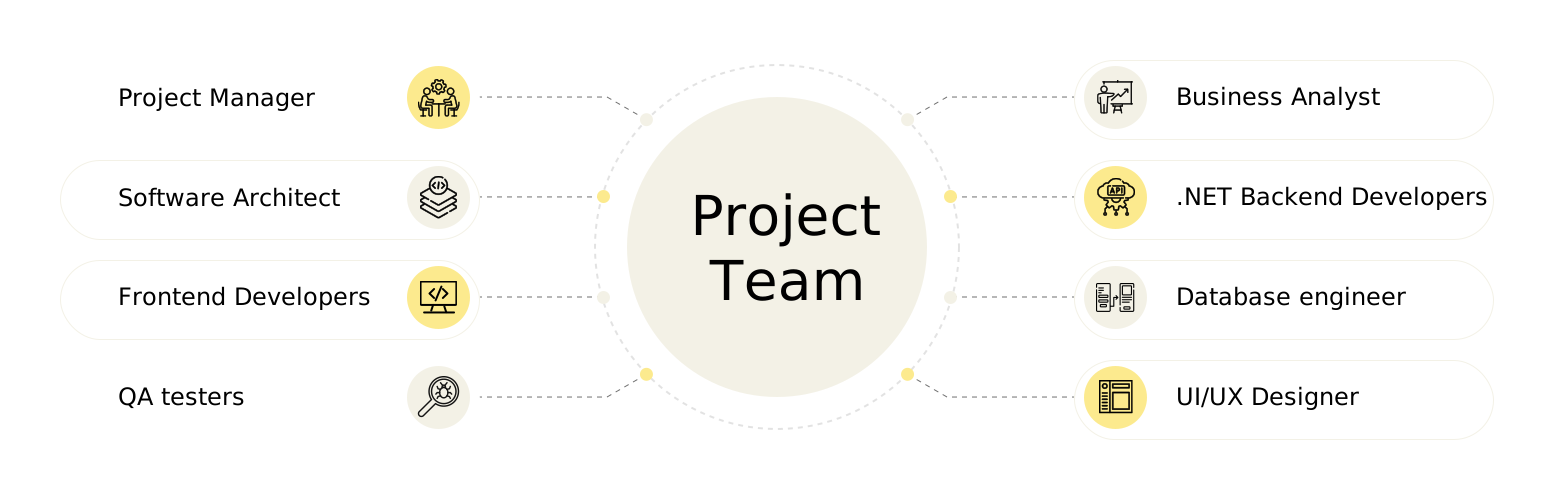
- Business analysis and solution design
- Software architecture
- .NET microservices backend development
- Angular frontend development
- HL7 ingestion microservice engineering
- OCR document parsing for clinical data
- Biomarker mapping and reference range implementation
- Biological age and risk scoring implementation
- Booking, membership and invoicing workflow
- UI and UX design
- Software testing and QA
- Azure cloud hosting and DevOps
- Ongoing support and maintenance
Platform features

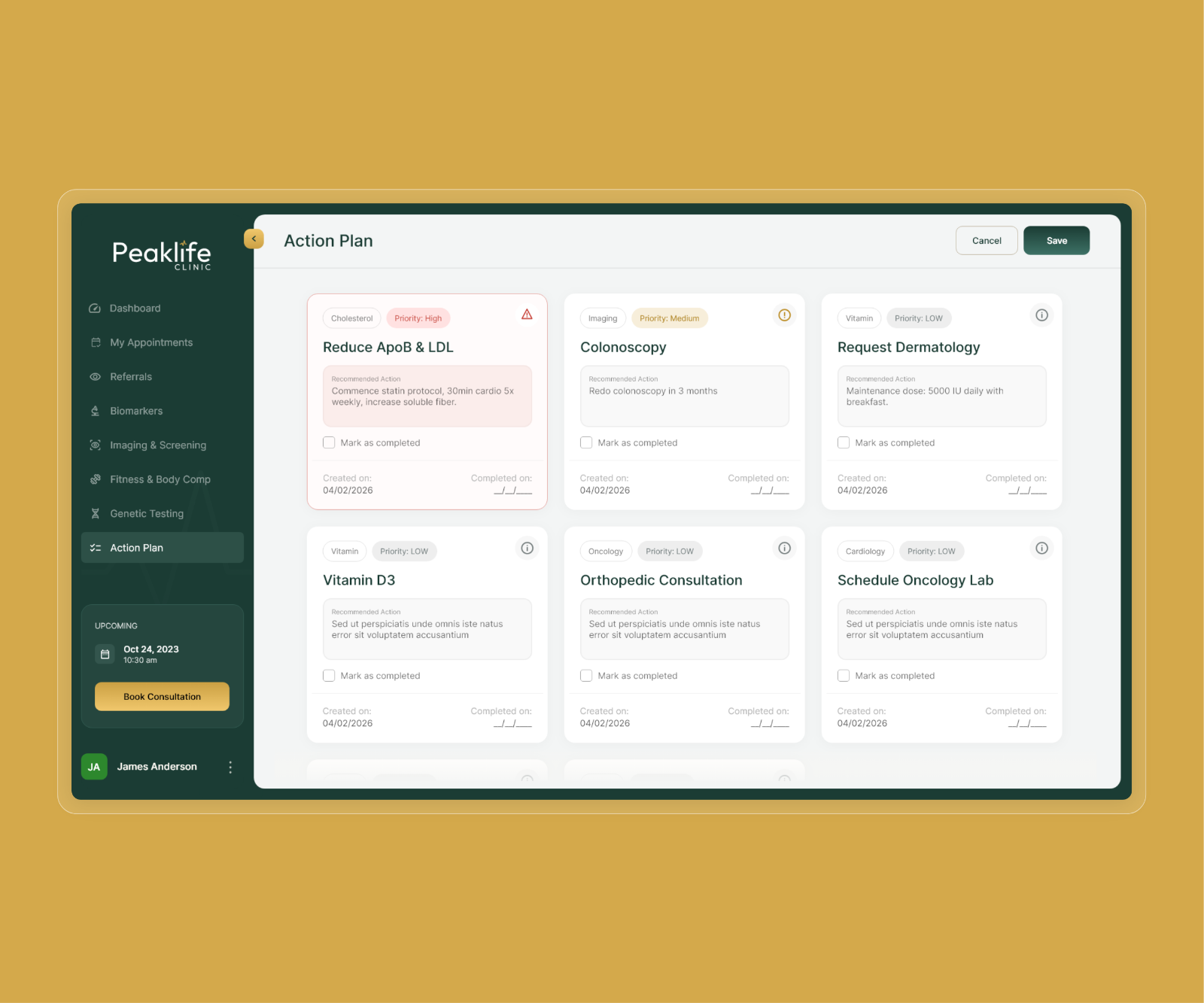
Automatic pathology and imaging ingestion through the HealthLink HL7 feed

Admin managed biomarker mapping for unrecognised result codes

Manual patient matching for results that cannot be matched automatically

OCR parsing of clinical documents that do not arrive as HL7

Biological age engine driven by the client's own scientific model

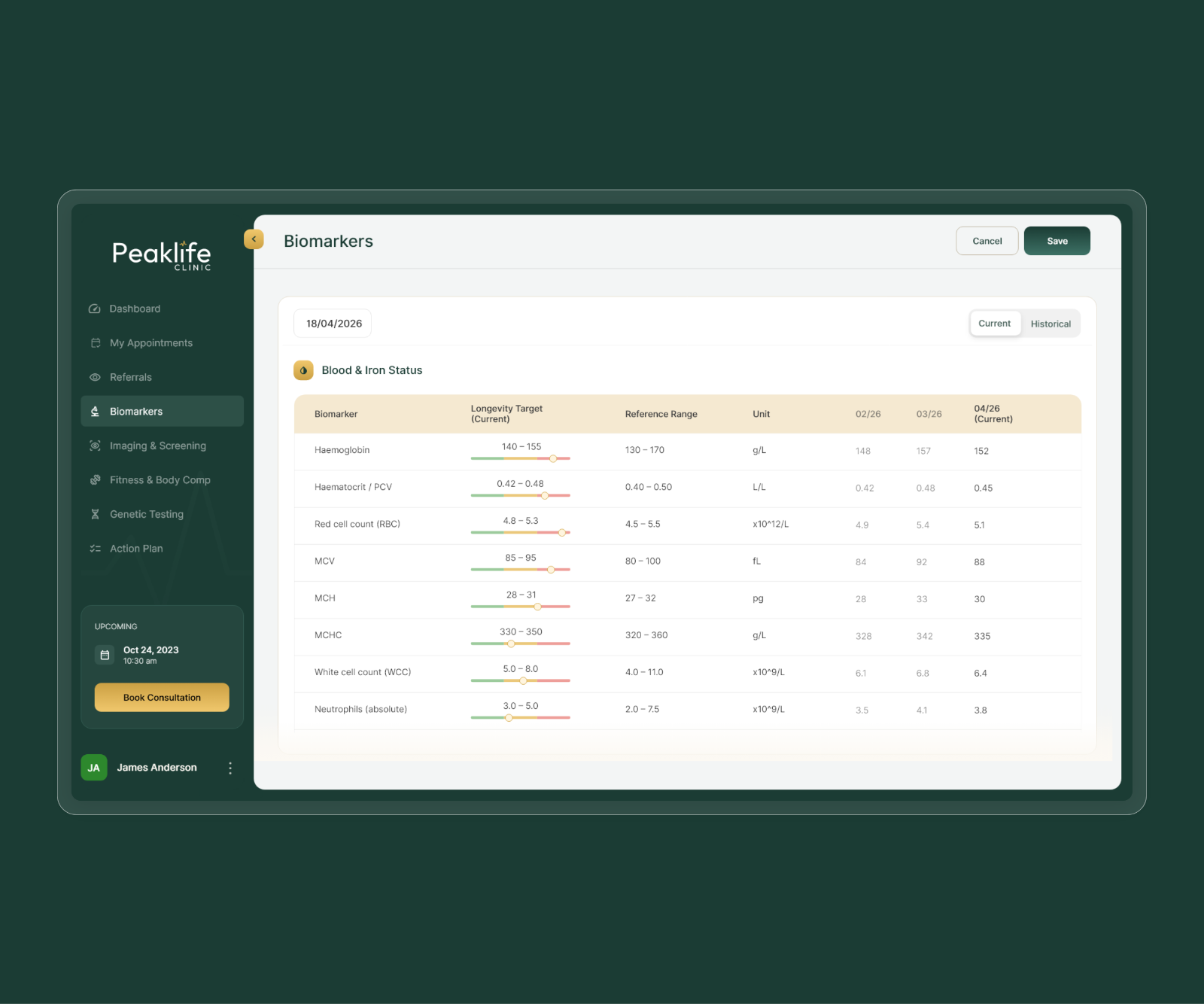
Biomarker traffic light scoring against below average, average and optimal ranges

Risk scoring across metabolic, cardiovascular and inflammation domains

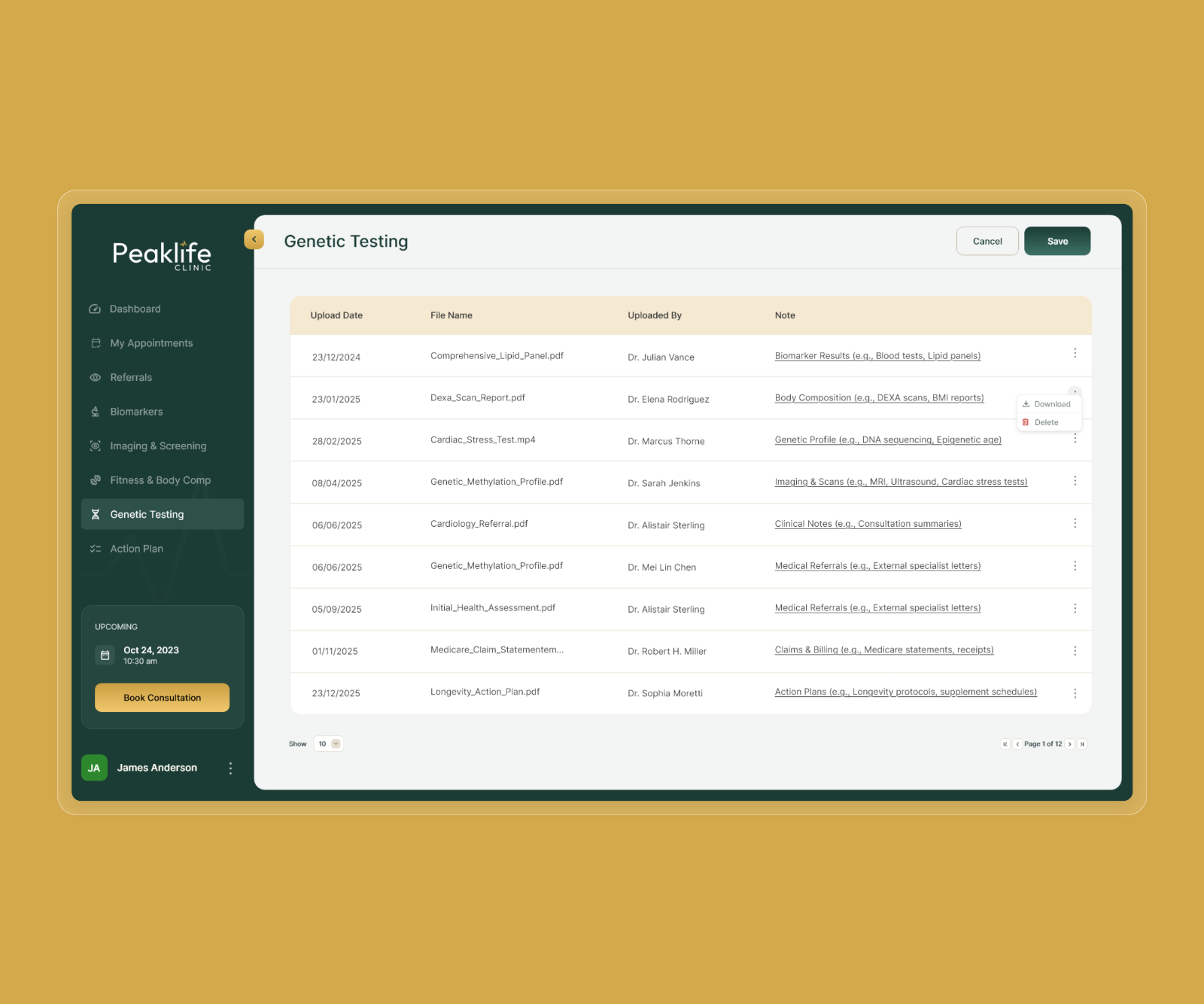
Imaging and diagnostics repository covering CTCA, calcium scoring, full body MRI, neurodegenerative markers and gene testing

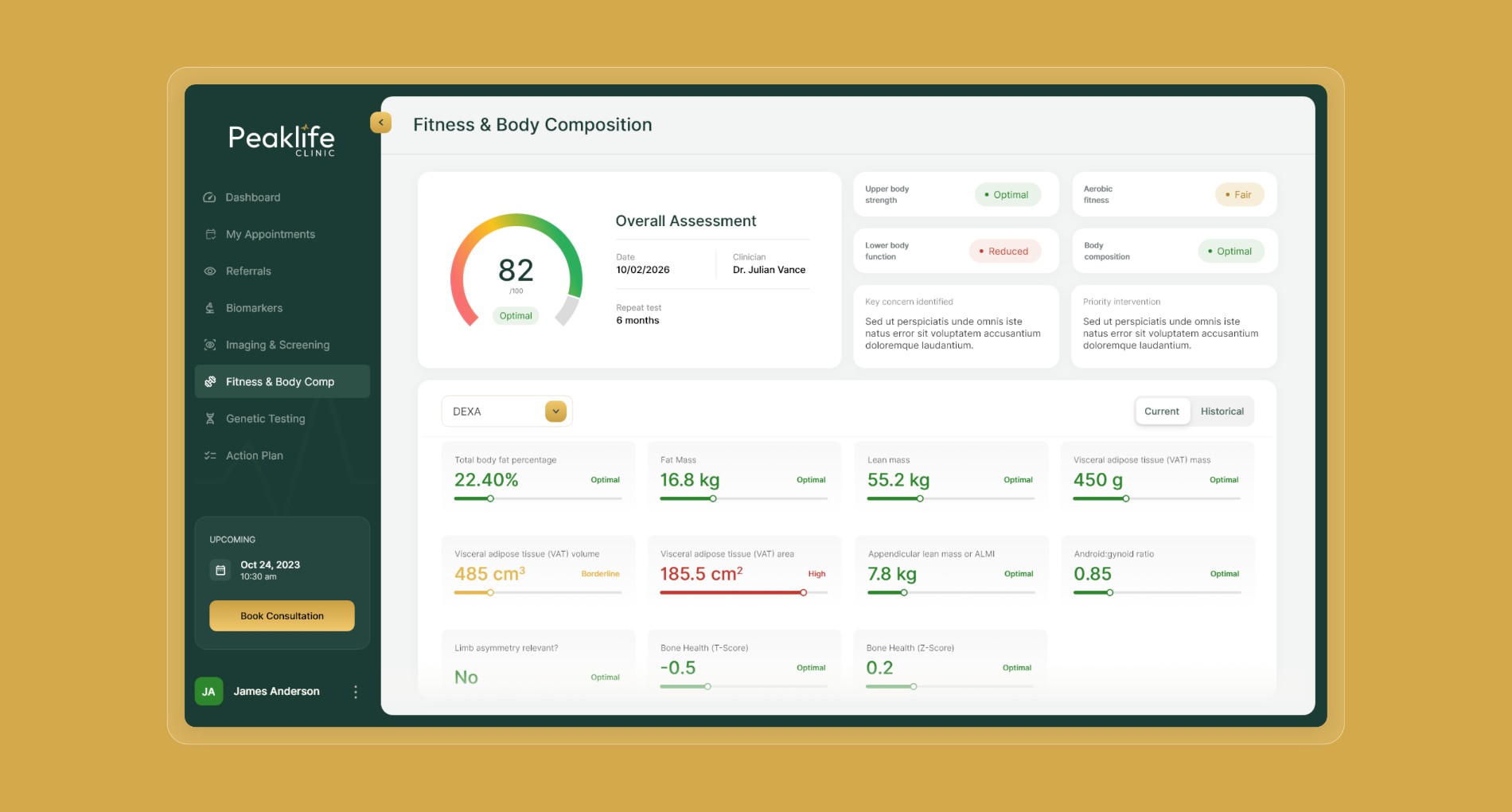
Fitness and body composition module covering DEXA, VO2 max, grip strength, sit to stand and dead hang

Timestamped clinical notes attributed to the treating clinician

Calendar bookings with a full booking lifecycle and admin overrides including appointment status management

Patient initiated booking requests with package based restrictions

Membership packages, tier status, renewal tracking and ad hoc invoicing

Digital referral form generator with prefilled clinician and patient information

Role based access across patient, doctor, clinician and reception

Architecture ready for additional clinics (multi-tenancy from day one)
The Challenge
A longevity clinic is not a general practice, and the software available to it was built for a different job.
The first problem was that the clinical model had no home. Standard practice management and EHR systems are organised around a presenting complaint, a consultation and a claim. Peaklife’s model is organised around a person over time. A single patient generates blood panels, a DEXA scan, a VO2 max result, grip strength, a sit to stand test, a CTCA, a calcium score, a full body MRI, neurodegenerative markers and gene testing, and all of it has to resolve into trends, a risk position and one biological age figure that a patient can understand in thirty seconds. Nothing off the shelf models that, and nothing off the shelf presents it to the patient rather than to the clinician.
The second problem was pathology data, and it turned out to be a hard one. Results reach the clinic through HealthLink as HL7 / ORU messages, sent by whichever pathology provider the Peaklife team referred that patient to. Every provider names things its own way. The same analyte can arrive under a different code and a different description depending on who ran the test, and naming conventions change over time even within the same provider. If the platform cannot recognise an incoming result, the trend graph breaks, the traffic light has nothing to score against, and the clinician is back to reading a PDF and typing numbers in by hand, which is the exact administrative burden the platform existed to remove.
The third problem was that results do not always match cleanly to a patient. HL7 matching relies on name and date of birth, and real world data is messier than that. A result that cannot be matched cannot be allowed to silently disappear, and it cannot be allowed to attach itself to the wrong patient either.
The fourth was the launch date. The clinic had an opening to meet, so the build had to cover everything required to run a clinic on day one and nothing that was not, while still leaving room for additional clinics and a wider software offering later.
Underneath all of it, this is some of the most sensitive personal data there is. Medicare numbers, private health fund details, blood work, imaging, genetic markers and clinical notes, held for people who have chosen a premium service and expect it to be handled properly.
The Solution
We built the clinical record around the person, not the appointment
The patient profile carries the full demographic and medical picture, including preferred name, Medicare and private health fund details, with admin editable fields constrained by role. Sitting under it are the tabs the clinical team works from: overall clinical goals entered by the clinician, medications, allergies, past medical history, uploads and files, and consultation notes that are timestamped and attributed to the clinician who wrote them. Patient level activity logging is also included.
Pathology that arrives on its own
We built the HL7 ingestion as a standalone microservice rather than as a feature inside the application. It receives files securely from HealthLink, parses HL7 ORU messages, extracts the biomarker values and their units, maps them to the correct category, matches the result to a patient on name and date of birth, flags the new result to the clinical team, and logs every error and mismatch it encounters.
Keeping it separate matters. Pathology feeds are the least predictable input in the system, and isolating them means a malformed message from one provider is a logged ingestion failure rather than an application outage.
Biomarker mapping, the part nobody plans for
Rather than hard coding a fixed list of analyte codes and hoping every lab agreed with it, we built a biomarker mapping screen into the admin portal. When a result arrives under a code or description the platform does not recognise, it is surfaced to the admin team as unmapped rather than discarded. They map it once, against the canonical biomarker it belongs to, and every subsequent result from that provider under that name flows straight through into the right trend, the right graph and the right traffic light.
The practical effect is that a new referring lab, or a lab that renames a panel, does not require a code change or a developer. The clinic handles it themselves in a few minutes.
Reference data sits behind it. Peaklife supplied the minimum, maximum and median values defining below average, average and optimal for each tracked biomarker, and the platform scores every incoming value against those bands. Some biomarkers traffic light ranges are actually defined via the HL7 data itself, and in that case we take that range rather than the client’s defined range, as sometimes it may also vary by lab.
Unmatched results are surfaced, not lost
Where a result cannot be matched to a patient automatically, it goes to a dedicated review screen in the admin portal. The team sees the incoming record and assigns it to the correct patient manually. Nothing is auto assigned on a partial match, and nothing sits in a failure log that nobody reads.
OCR for everything that does not arrive as HL7
Not every result comes through the feed. Imaging reports, external records and documents a patient brings with them arrive as PDFs. We added OCR document parsing so clinical data can be read out of those documents and captured against the patient rather than retyped.
The biological age engine, their science implemented into a web system
The biological age algorithm and the scoring model behind it are Peaklife’s intellectual property. Our job was to implement it faithfully and keep it adjustable, so the formula can be refined as the clinic’s own evidence base grows without a rebuild.
It computes from multi system data across blood work, fitness and imaging and sits at the top of the patient dashboard, alongside risk scoring across metabolic, cardiovascular and inflammation domains, the biomarker traffic light, fitness and imaging summaries, clinician recommendations and the patient’s next appointment.
The commercial side runs in the platform too
Membership packages, subscription tier status and renewal dates are managed inside the platform, and the admin team can raise ad hoc invoices and track them through their status.
Referrals generated, not retyped
The referral form generator produces output ready for pathology and imaging partners, prefilled with the patient’s name, date of birth, address, Medicare number, contact details and so on. It removes a repetitive piece of reception / clinician work to help optimise business processes.

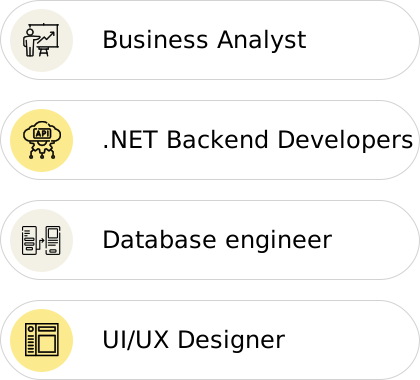
Project Team
The Challenge
The platform is live and in production.
Pathology and imaging results arrive automatically and land against the right patient with the right reference ranges applied, and where they do not, the clinical team has the tools to resolve it themselves in the admin portal rather than logging a support ticket. That single decision, to treat biomarker naming as an operational problem to be managed rather than a technical problem to be solved once, is what makes the ingestion durable as new referring labs come on.
The build covers the full clinic workflow. Reception can book, generate referrals, raise invoices and manage memberships. Clinicians can review, record and recommend. Patients get a dashboard built to be read by a person rather than by a doctor.
Peaklife is a single clinic today, but the platform was architected for more than one from the start, which keeps both multi clinic expansion and a wider software offering open without re-architing underneath. Designpluz continues to support and extend the platform.
“The clinical model was never the hard part. The hard part was that every lab calls the same test something different, so we stopped trying to predict the naming and gave the clinic a screen to manage it.”
Technologies Stack
Frontend




Backend






Hosting & Tools




Integration



Security, Privacy
and Data Handling
- Hosted entirely in Australia on Microsoft Azure platform services
- Role based access control across patient, doctor, clinician and reception, with field level restrictions on clinical data
- Invitation based onboarding for clinical and administrative users
- Secure password policies with multi factor authentication
- Timestamped and attributed clinical notes
- Patient level activity logging across the record
- Every ingestion error and unmatched result logged and surfaced for review rather than discarded
- Platform services used for storage, secrets and API management rather than self managed infrastructure
Key Project
Considerations