Opiix
Innovative Podiatry Clinic Using Software For Tailored Outcomes

Improving Orthotic Accuracy
Using Custom Podiatry Clinic
Software and 3D LiDAR
Scanning with IoT
The Challenge
Many podiatry clinics across Australia relied on manual casting to create custom orthotics instead of using a 3D scanner system for Podiatry clinic environments. The process was slow, messy, and often inconsistent. Each cast had to be sent to a laboratory before fabrication could begin, leading to higher costs, longer waiting times for patients, and more administrative work for clinic staff. With limited visibility once the casts left the clinic, it was difficult to maintain accuracy and improve service delivery. These gaps highlighted the need of a custom software which could streamline the entire process, and patients could get their orthotics at the earliest.
Features
- 3D Foot Scanning Hardware Integration
- LiDAR Scanning via Mobile App
- End to end order lifecycle management module
- Auto‑generation of invoices from completed orders
- High‑resolution STL model export for manufacturing and CAD workflows
- Direct import/export of STL and related mesh formats
- Ability to push models into AutoCAD workflows
The Solution
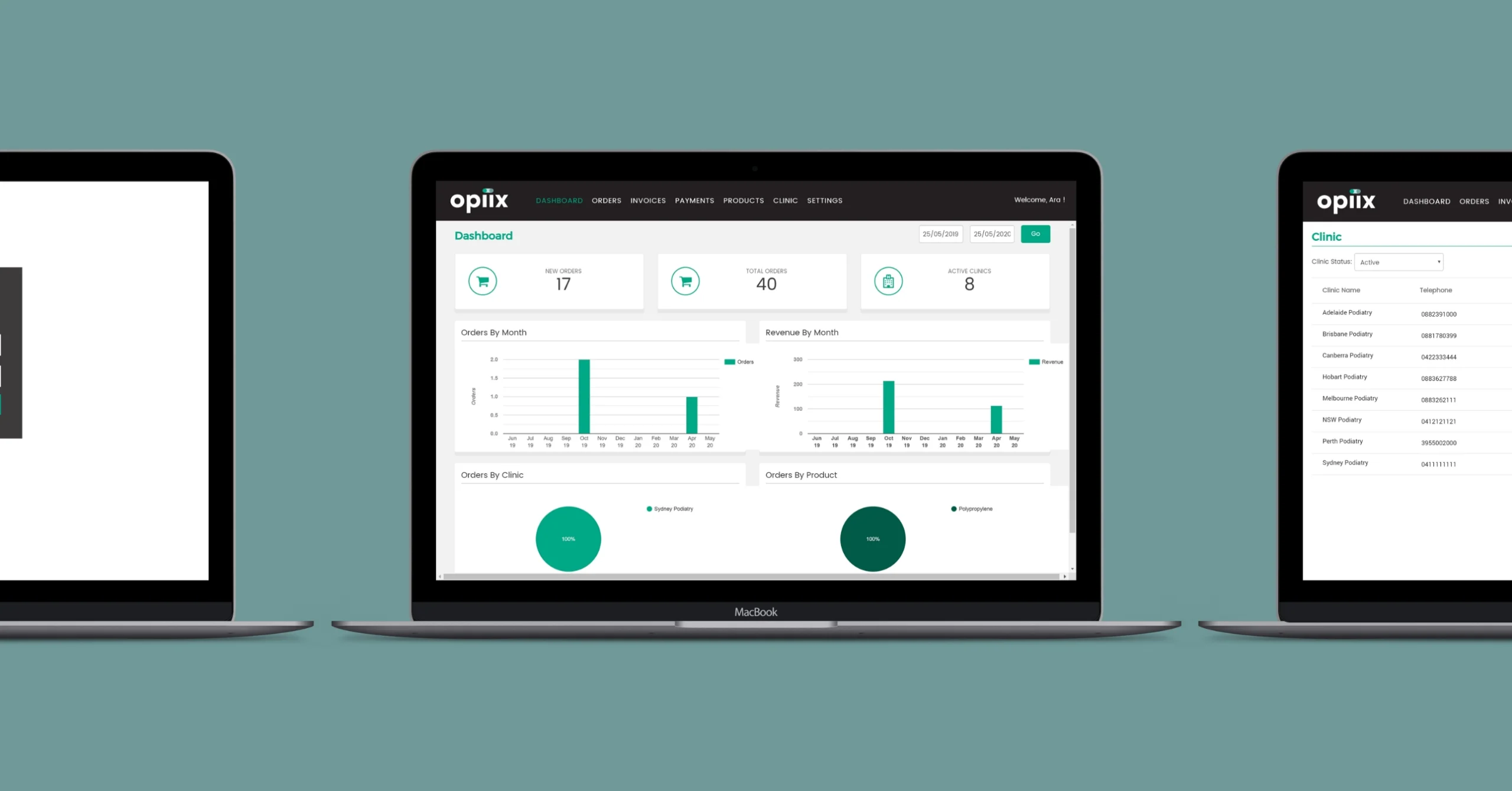
We designed and developed a custom Podiatry clinic software, called Opiix, which transformed the orthotics workflow by replacing manual casting with real-time digital scanning and automated data transmission in the clinics. A 3D scanner system was integrated that allowed clinicians to capture accurate foot scans quickly and with far less handling. The IoT-enabled solution combined the scanner with a desktop application that recorded the scan data and prescriptions before sending them directly to the lab through a secure cloud portal, improving turnaround times and transparency.
Here’s how our solution transformed the workflow for clinicians:
- Scan the patient’s foot using a connected device.
- Fill out a digital prescription form with materials, adjustments, and notes.
- Click “Send”, and the scan, prescription, and metadata are instantly transmitted to the lab.
No more casting. No more postage. No more delays.
Components and Features
- MACH Framework: It follows MACH principles, Microservices, API-first, Cloud-native, and Headless, for flexibility, scalability, and rapid innovation.
- Module Architecture: Every workflow, like authentication, scanning, prescription, and billing, was deployed as microservices hosted on Azure Web Apps.
- Desktop Application: It was built with Microsoft .NET Core (C#) for reliable performance and interfaces directly with the 3D scanner to capture and process foot scans.
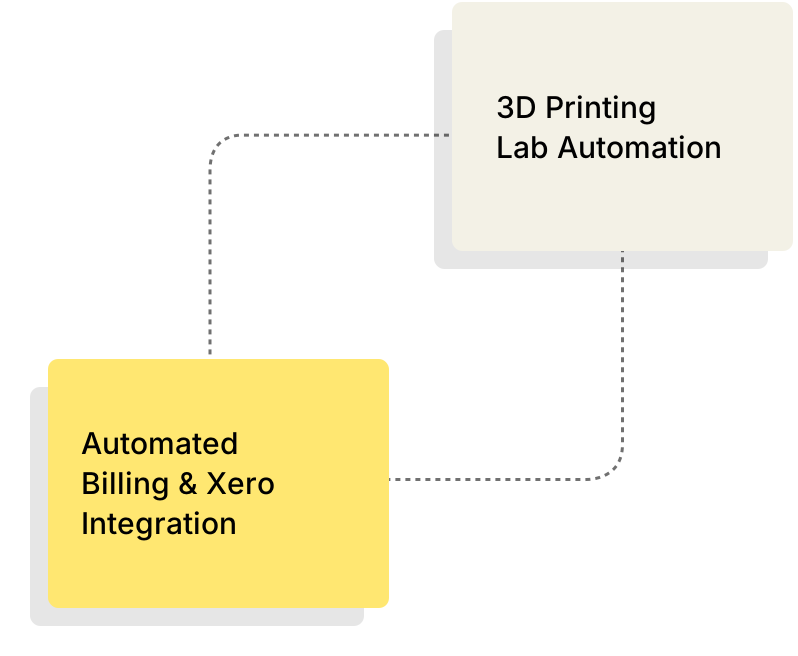
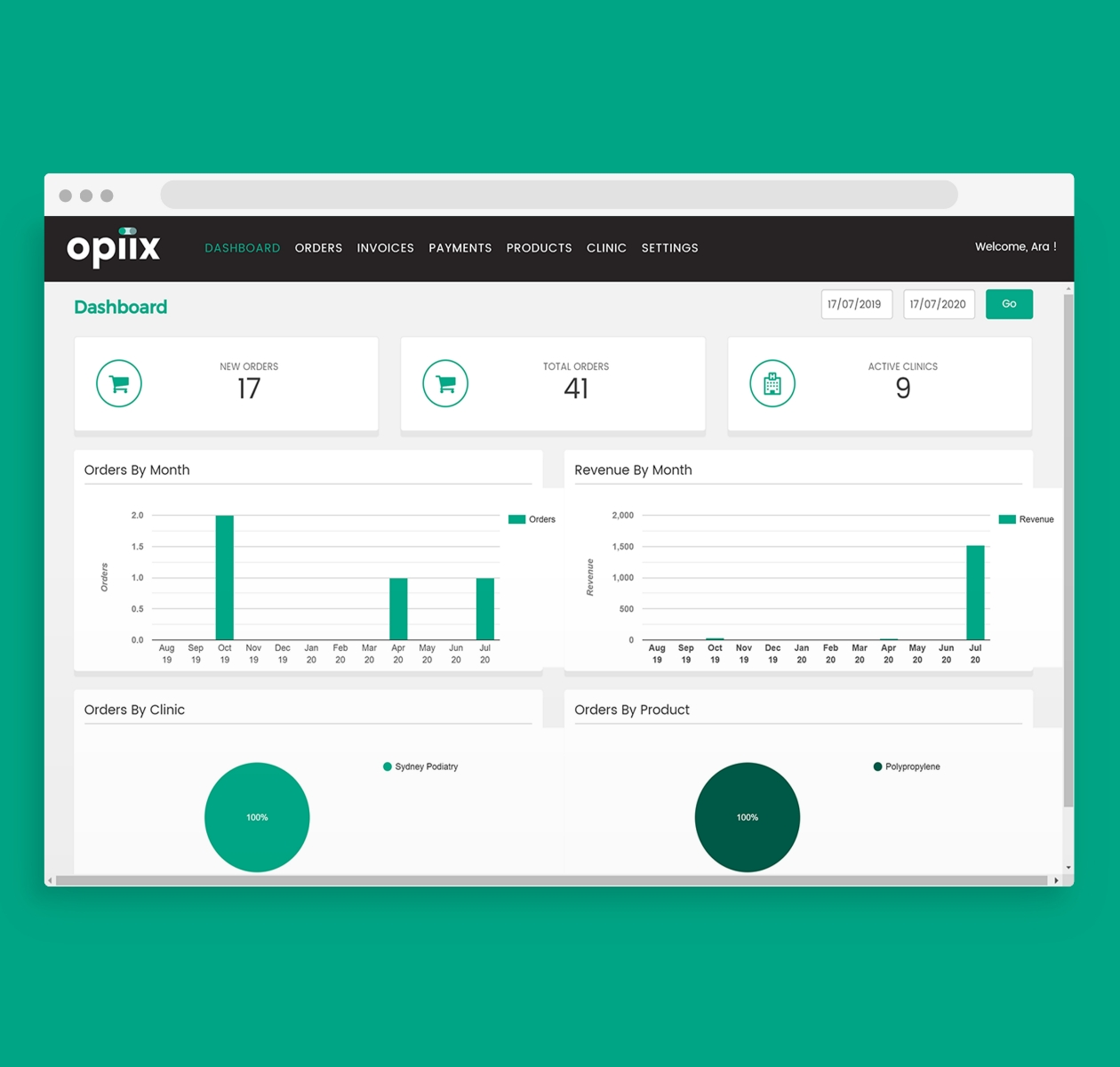
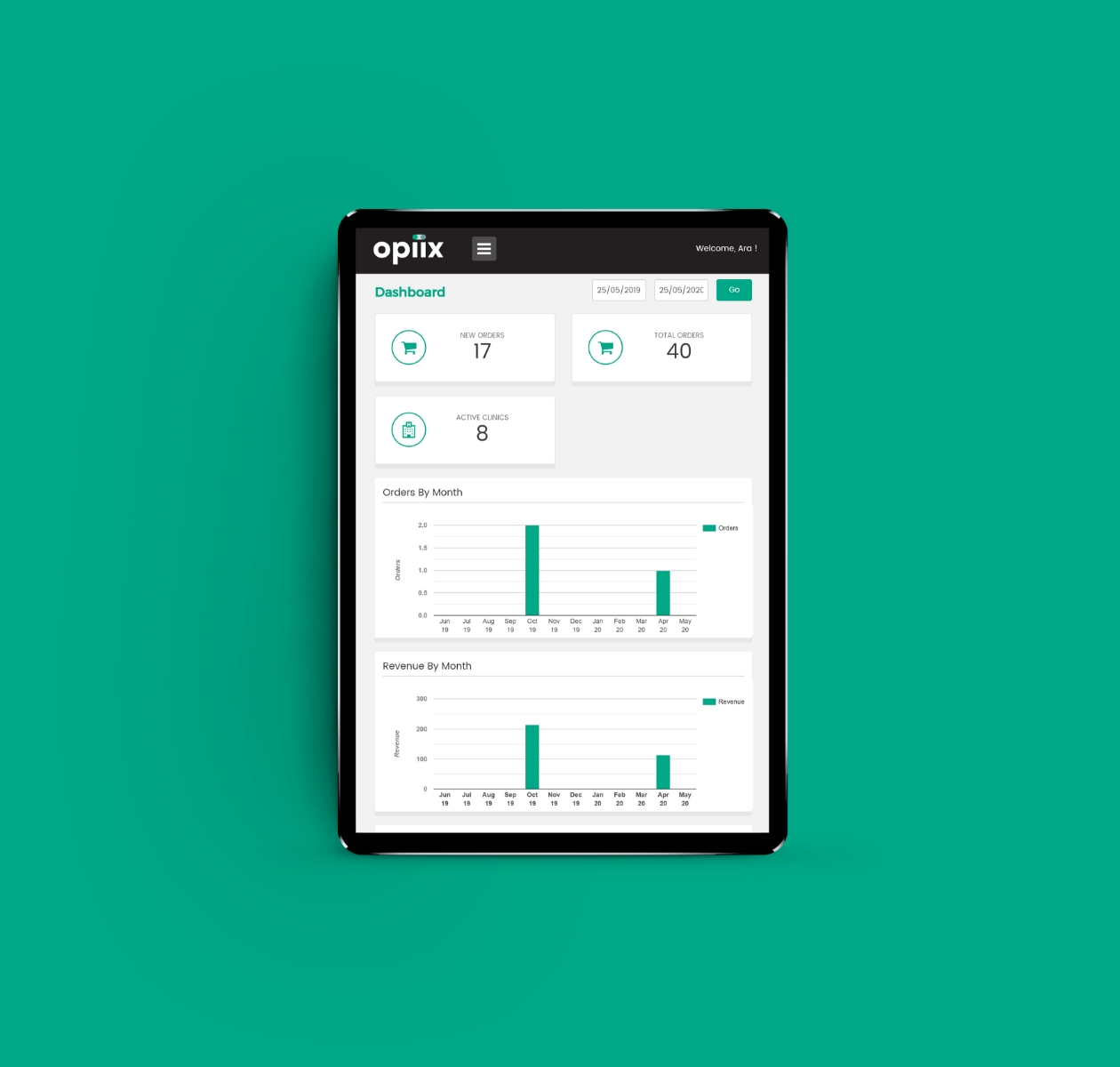
- Admin & Billing Portal: It tracks scan usage per clinic, generates monthly invoices, and Integrates with Xero for automated reconciliation.
- Lab Portal: It receives scan files and prescriptions, auto-imports into AutoCAD for 3D printing, and updates order status for clinicians.
- Clinician Portal: It tracks order progress from submission to delivery and manages patient history and prescriptions.
- Secure Cloud Storage: Patient information, scanned files, and prescriptions were stored safely in an Azure SQL database.
Technologies Stack
Frontend




Backend






Hosting & Tools




Future Upgrades:
Mobile LiDAR Scanning
& Beyond
Our team is bringing more updates to Opiix, so that it gives more flexibility to the clinic in how they capture patient scans. We are developing a mobile application so that clinicians can use LiDAR cameras on supported smartphones and tablets to take simple foot scans without any extra equipment.
This mobile extension is designed to:
- Make scanning possible wherever appointments take place.
- Reduce the need for dedicated scanning hardware.
- Help the clinic support remote patients and home visit services.
Opiix can integrate these capabilities smoothly without affecting existing workflows because of the MACH architecture.
Looking ahead, the team is aiming to upgrade Opiix such that it could support other medical scanning needs in the future, introduce AI to assist with scan analysis and diagnostics, and connect the custom podiatry clinic software with national health systems and third-party platforms for secure and streamlined information access.
Key Project
Considerations
The web portal integrated with the 3D scanner system for a Podiatry clinic was developed using HTML, CSS, JavaScript, and Angular. The lightweight interface allowed clinicians to capture and upload scanned files instantly, reducing administrative time and eliminating manual record handling.

We had a wonderful experience working with Designpluz on our new website.
The team went above and beyond to launch earlier than expected and handled every challenge with patience and care. They were always responsive, easy to communicate with, and proactive in finding solutions. Working with the Designpluz team has been a truly positive experience!