
Why Shopify Beats Other eCommerce Platforms?

The selection of an eCommerce platform directly affects the speed at which a startup business can be created, as well as the scalability and time spent on troubleshooting, as opposed to promoting sales. Most businesses start using a relatively inexpensive solution, but realise that dealing with technology problems is a whole other business on its own.
By the year 2025, approximately 29% of online stores run on Shopify, and Shopify stores have increased 18% year-over-year in 2025 Q4. The reason behind the increasing adoption is that Shopify takes the headaches off the seller’s back and gives a solid, ready-to-grow base so you can focus on selling, not troubleshooting.
The Real Problem With Traditional eCommerce Platforms

The initial appeal of older-style eCommerce platforms is that they allow business owners to have full control and relatively inexpensive options. However, once established on an older-style eCommerce platform, many businesses find themselves burdened with ongoing technical responsibilities.
- Technical support for a hosted website (hosting, servers and backup): A business owner must decide on their own where to host their website, configure their server environment, manage their storage, and monitor and perform backups, which requires continuous attention to avoid having downtime, losing customer information, or experiencing poor performance due to high levels of visitors and/or orders.
- Manual updates to security through clumsy plugins: The ability to maintain the security of your eCommerce store typically depends on the use of third-party plugins that you have to update manually. Inconsistent updates, version incompatibilities, or abandoned plugins can provide an opening for potential breaches and cause significant compliance issues.
- Even minor technical errors stop sales: Small technical errors, including but not limited to plugin conflicts, server crashes, and failed updates, can affect the flow of checkout, payments, and availability of the site to consumers and impact revenue.
- Ongoing maintenance costs increase: As time passes, the cost of troubleshooting, developer assistance, emergency repairs, and improving the performance of your eCommerce site increases operating costs and reduces profit margin.
Shopify’s All-in-One Platform Model
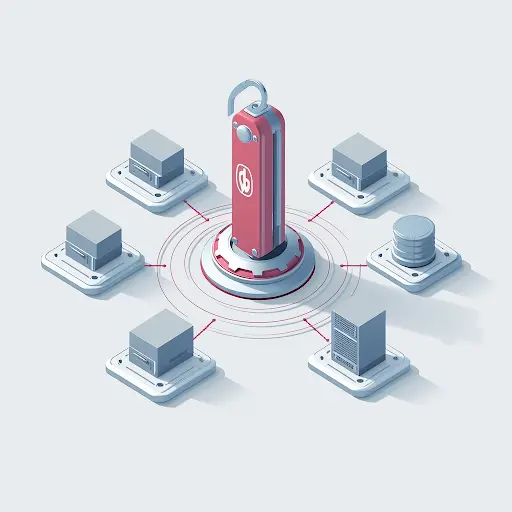
Shopify is fully hosted and designed to remove technical complexity for eCommerce businesses, allowing operational focus to remain on growth rather than infrastructure management.
- Hosting included with every plan: Reliable, secure hosting is built into every Shopify plan, removing the need for server setup, uptime monitoring, or performance tuning by the business.
- Easy platform and security upgrades: Platform updates and security patches are handled automatically in the background, ensuring stores remain secure and performant without manual intervention.
- Built-in SSL and compliance setup: SSL certificates and industry compliance features are enabled by default, allowing secure transactions without additional configuration or third-party services.
- Shopify handles the backend: Infrastructure, scaling, and system stability are managed by Shopify, reducing technical overhead for store owners.
Shopify vs WooCommerce
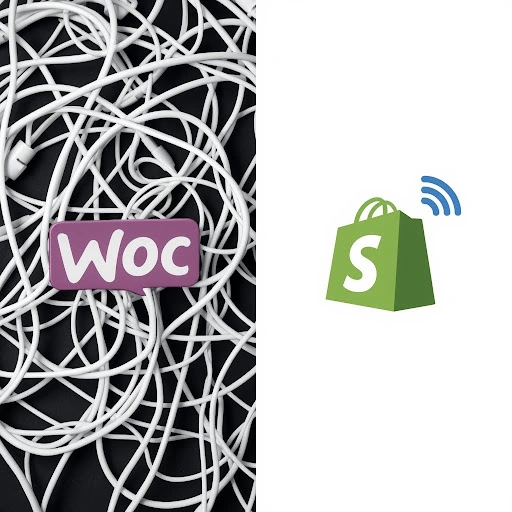
WooCommerce gives businesses a lot of freedom while hosting. It needs nonstop upkeep for things to run right.
- WooCommerce requires separate hosting and server management: Businesses need to decide, set up, and administer hosting options, which may impact reliability and speed during peak traffic.
- Plugin clashes happen during updates: Core updates or plugin changes can hamper checkout, payments, or product pages.
- Site speed matters in hosting choice: Faster performance comes with higher hosting costs and continuous upgrades.
- Shopify’s setup is quicker and more solid: Shopify provides centralised hosting, updates, and system administration, which eliminates system breakdowns and maintenance.
Shopify vs Magento
Magento is built for big, enterprise setups, but it’s heavy, complicated, and beginners fear operating it. For most growing businesses, that level of complexity slows everything down.
- Needs a team of experienced devs to develop and maintain: Magento sites require experienced development teams for development, customisation, and maintenance.
- Hosting and maintenance costs are high: Hosting, security, optimisation, and maintenance can be very expensive.
- Time-consuming to launch: Launching a Magento store can be very time-consuming due to the complexity involved in custom development.
- Scaling on Shopify is easy with minimal tech headaches: Scaling on Shopify is easier than dealing with complex tech or maintaining a huge development team.
Shopify vs Online Marketplaces (Amazon / Flipkart)

Selling on marketplaces gives quick exposure but restricts long-term control. Shopify gives businesses:
- Total control over branding and customer experience: Shopify gives businesses total control over their storefront design, branding, and checkout experience, which is not restricted by marketplaces.
- Full access to customer data and shopping habits: Customer information and shopping habits are still available, allowing for better marketing and analytics.
- No worries about marketplace algorithm changes: Sales are not impacted by changes in rankings, policies, or account closures by third-party marketplaces.
- Transparent fees vs high marketplace commissions: Shopify fees are transparent, but marketplace commissions and additional costs impact profitability.
Hosting, Security & Performance Advantage

Shopify deals with hosting, security, and site speed for businesses, so there are fewer things to worry about.
- Global CDN for fast page loads: Shopify uses a global Content Delivery Network (CDN) backed by Cloudflare to serve its store assets from locations closest to the customer. The business’s online store loads quickly worldwide
- Protection against traffic spikes and downtime: Shopify is built on an optimised Monolith architecture, which is carefully structured into zones, each handling one business domain, like checkout, payment, or inventory. The zones are integrated using proprietary logic that allows the platform to scale critical functions such as checkout, payments, and inventory without affecting overall site stability during traffic surges.
- PCI compliance and fraud prevention: Shopify provides built-in Level 1 PCI DSS compliance to all stores by default and secures the payment data with encryption and strict network security. Its compliance covers all six PCI standard categories, which include cardholder data protection and strong access control implementation.
- No need for third-party security tools: Core security measures, such as SSL certificates, platform updates, and vulnerability monitoring, are included as part of the Shopify subscription. Businesses don’t need to integrate any separate security plugins or third-party services to maintain a secured store environment.
Ease of Use for Business Owners
Unlike WooCommerce or WordPress, Shopify is designed for business owners and operational teams who need to manage daily eCommerce activities without deep technical knowledge.
- Simple and clean admin dashboard: The Shopify dashboard is your central hub for store management and provides access to orders, products, customers, payments, and basic performance analytics. While it is simple and clean, it needs to be customised to create a unified view with all the KPIs important to a business.
- Easy product and inventory management: Shopify provides native tools for managing products, variants, pricing, and stock levels across online and physical sales channels. It also has an integrated POS system that synchronises in real-time between retail locations and the online store.
- Order, customer, and payment handling in one place: Shopify is a unified, cloud-based commerce platform that synchronises data in real-time across all sales channels, including online store, physical retail, social media, and marketplaces. It has unified order management, integrated payment processing, and built-in CRM as well, so you can get an overall view of eCommerce operations.
- Minimal learning curve for teams: It is a hosted platform, so all the technical aspects of managing an eCommerce store are handled by the Shopify team. The intuitive drag-and-drop interface makes it easy to use. Shopify provides extensive documentation, tutorials, and a community forum, so it is easy to find answers on the Internet regarding any problem.
Apps vs Plugins: Stability Comparison
Shopify apps work within a controlled ecosystem. Everything is built to fit together properly, with less breaking down after updates.
- Apps are carefully reviewed before hitting the store: Apps go through Shopify’s review process before being listed, so businesses don’t have to use random tools.
- Fewer conflicts during updates: Apps are far less likely to clash with each other during updates compared to plugins on self-hosted platforms.
- Install or uninstall in a blink: Apps can be added or removed without breaking core store functionality.
- Less upkeep compared to traditional plugins: Updates are handled efficiently in the background, hence there is no need to check for issues or fix things after every change.
Scale Operations Efficiently and Easily
Shopify is built to support long-term business growth because its cloud-based architecture allows stores to scale within the same ecosystem.
- Easy handling of traffic spikes and orders during festivals and sales: The combination of cloud-native auto-scaling infrastructure, a global content delivery network (CDN), and specialised high-volume checkout systems allows Shopify to manage traffic and orders. It can manage millions of concurrent visitors and can process over 10,000 transactions per minute
- Manage multiple spots and warehouses: Merchants can stock, track, and fulfil inventory across up to 1,000 physical locations, including retail stores, warehouses, and 3PL partners. Stock levels can be tracked and allocated across channels from a single admin, supporting both online and physical retail expansion.
- Supports multi-currency and global sales: Businesses can sell in multiple countries and manage region-specific pricing and checkout experiences using Shopify Payments. The prices are automatically displayed in local currency, and the conversions are handled at checkout. Shopify Markets supports 130+ currencies and provides a seamless international checkout workflow.
- Upgrade plans without starting over: Merchants can easily move between Shopify plans, including Shopify Plus, suitable for enterprise-level requirements. Businesses can easily gain access to advanced functionality, like AI-powered reporting, automation, and customisation options, without disrupting the existing store setup.
Cost Transparency and Predictability

Shopify offers multiple pricing plans with monthly or annual billing options, so you can continue with the most feasible one in terms of budget and the features the plan offers.
- Fixed monthly fee: Pay a steady amount every month. The basic plan starts at $42/month billed yearly, and the Plus plan is available at $3,700/month billed annually. Every pricing plan has everything mentioned clearly, including card rates, third-party transaction fees, and credit card fees.
- Fewer surprise maintenance costs: There are no setup fees required, and all the plans include secure, unlimited eCommerce hosting. Shopify manages platform updates, security patches, and performance improvements. It reduces unexpected expenses related to server maintenance or version upgrades. However, a domain name purchased from Shopify will require annual renewal fees, or businesses can use the free myshopify.com domain name.
- Reduced developer dependency: Shopify’s managed environment minimises the need for a dedicated team of developers for routine tasks. Built-in tools, app integrations, and automatic updates reduce the operational workload related to ongoing maintenance and manual updates.
- Lower long-term operational expenses: Shopify eliminates some recurring costs, like hosting management, frequent custom maintenance, and security monitoring. Shopify helps reduce the total cost of ownership over time, particularly as the business scales.
Shopify Limitations
Shopify is a fully-hosted and managed platform. While this reduces the technical management, it can pose a problem to businesses that require deep backend control and access to server-side logic for customisation.
- Limited backend logic control: Shopify operates within a managed environment, so it restricts access to server-side logic and database customisation. Businesses with specific backend workflows or complex processing rules may find Shopify a bit restrictive.
- Deep customisation may require Shopify Plus or custom apps: Advanced customisation, especially around checkout logic, automation, or complex integrations, may require businesses to upgrade to Shopify Plus or build custom apps.
- Monthly subscription pricing model: Shopify operates on a subscription model with monthly or annual billing options. This model offers predictability, but it may not suit businesses that prefer a one-time licensing model or full ownership of infrastructure.
Ideal Businesses for Shopify
Shopify is ideal for businesses that want speed and stability, and here are some businesses that can rely on Shopify to get started with eCommerce operations:
- Startups and new online stores that need a fast and reliable launch without the technical overhead.
- D2C brands and product-based businesses benefit from Shopify’s built-in integrations and tools that support direct-to-consumer selling.
- Small to mid-size companies find that the platform offers predictable costs, less maintenance, and operational efficiency.
- Agencies building client solutions so the team can deliver maintainable and scalable eCommerce stores with standardised workflows.
Final Takeaway
Shopify cuts the tech stress so businesses can level up because the core infrastructure and operational complexity are handled at the platform level, and teams can focus solely on growing and expanding their store operations. For a lot of brands, Shopify’s the go-to base that keeps growth steady and real.
Creating a Shopify store requires in-depth knowledge about the platform to create an optimised store for your brand. Designpluz Shopify developers can help in designing and building eCommerce sites that actually convert and run optimally.
From suggesting the best Shopify plan as per your brand needs to customising the store as per your brand identity, the Designpluz team can streamline the store development and deployment process. Connect with our team today and discuss your eCommerce store requirements.